Hybrid-threat crisis simulations
Rehearse uncertainties
Realistic, web-based crisis simulations with multi-channel media pressure built in, and an audit-ready record that proves your team is ready.
Why Meleys
Hybrid threats arrive on several flanks at once
Our scenarios combine sabotage, cyberattacks, disinformation and influence operations, and attacks on critical infrastructure, the way real hybrid campaigns unfold. They are designed by a former government minister and hybrid-threats researcher.
A controlled adversary
The adversary is played by the Pink Cell, part of game control, rather than a free red team. Pressure on the teams is real but calibrated, so the exercise stays a test of decisions instead of turning into chaos.
AI-generated public reaction
A cast of personas, each with its own country, language and character, reacts in character to the news. The facilitator reviews the reactions and releases them over time, so the public narrative moves the way it does in a real crisis.
Decisions on the record
Teams record their decisions as they take them, and every revision is kept. The debrief shows what was decided, when, and how it changed, so bottlenecks are visible, not anecdotal.
Nothing to install
Participants join from a browser, in the room or remotely. Senior decision-makers spend their time on the crisis, not on onboarding.
Who it's for
Built for teams that must be ready
For critical infrastructure companies
Operators of critical infrastructure can't afford to learn their crisis response during a real incident, and regulators now expect evidence that you have rehearsed it. Meleys lets your team practise crisis response online, under realistic media and stakeholder pressure, and gives you the evidence for compliance with NIS2 and CER Directives. Role-based access keeps each team to the information its role would have, so every participant feels the pressure of a real event. Multi-site drills let you run the same exercise across every site in your network without flying in a facilitator each time.
Each exercise produces a timestamped record of every inject, decision and response. That record shows where the team responded well, where decisions stalled, and what to fix before the next drill. Use it to support your NIS2 and CER compliance file, brief your board, and show that your resilience measures are tested, not only documented.
Case study
National grid operator: security crisis exercise
Sabotaged pylons and substations, combined with information manipulation on social media. This was a company-wide crisis exercise involving all departments. The event log timed every reaction, decision and communication, from the dispatcher to the board.
Read the case study →For governments, municipalities and NGOs
Public bodies and humanitarian organisations are judged on how they perform when it counts, and they must show that they prepared for it. Meleys helps civil protection authorities, municipal crisis teams and NGOs run multi-agency and multi-team exercises online, with realistic media and information pressure. Role-based access means each agency sees only what its role would see, so exercises stay realistic and information doesn't leak between teams. Multi-site exercises let field and headquarters teams train together wherever they are.
Every inject, response and decision is captured in a timestamped event log, so the record of what happened is ready as soon as the exercise ends. That record supports audit and oversight requirements, and donor or accreditation reporting. It also lets your team run more exercises each year on its own, without bringing in an external facilitator.
Case study
Two municipalities in eastern Latvia: hybrid threat simulations
Crisis exercises for municipal authorities, first responders and civil society in Krāslava and Daugavpils.
Read the case study →For executive education providers
Participants remember a programme for the hard decisions they had to make under pressure, not for the slides. Meleys lets your instructors run complete crisis simulations with teams of participants, each playing a defined role, under realistic media and information pressure. The exercise feels like a real crisis rather than a game, which gives participants a genuine challenge to learn from. You stay in control throughout: add or mute injects as the exercise unfolds, and follow every team's moves from a single dashboard.
Every decision is captured in a timestamped event log, so the debrief is built on what each team and participant actually did, not on memory. You can see individual contributions and each team's course of action, which turns the exercise into evidence of learning for participants. We also design and deliver bespoke trainings, tailored to client’s curriculum, and have run them in Germany, the UK, Latvia, the Western Balkans and the Middle East.
Case study
Sympodium Institute (London): strategic communications wargame
The wargame modelled hybrid attacks, including cyber attacks and sabotage followed by information manipulation. It was delivered as training for participants of the International Diploma in Strategic Communications programme.
Read the case study →For intelligence and geopolitical risk consultancies
Intelligence and geopolitical risk consultancies are valued for how well they help clients anticipate a crisis and test how they would respond to it. Meleys gives consultancies a ready-to-use online platform for running hybrid-threat and security crisis wargames under their own brand. Scenarios unfold across email, news media, X-style microblogging and blogs. Simulated information operations, impersonated actors and AI-generated social media reactions keep decision-makers under realistic pressure.
Every inject, team decision and response is captured in a timestamped event log, so your analysts have a full record for course of action analysis and client debriefs as soon as the exercise ends. A partnership can start with a single branded simulation and grow into an annual white-label contract, with or without Meleys support for scenario development and facilitation.
Case study
ECFR: geopolitical shock scenario simulation (wargame)
Geopolitical shock simulation for ECFR, involving EU officials and former and current government officials from multiple EU and NATO countries.
Read the case study →Platform features
From setup to debrief
Setup
Admin dashboard. Upload and manage scenarios and injects.
Pre-defined inject library. Start from ready-made injects, or add your own.
Spreadsheet-based scenarios. Author scenarios in a spreadsheet file and import them, so your content stays yours and isn't tied to a vendor library.
Hosted and web-based. Teams join from a browser, with no infrastructure needed from your side.
Your brand. Run simulations under your own logo and colours.
Running the exercise
Role-based access. Facilitators run the exercise from a control dashboard with a full view of every team. Each team works from its own dashboard and sees only what its role would see.
Real-time control. Add or mute injects as the exercise unfolds, without technical support.
Decisions interface. Teams record their decisions inside the exercise, and every revision is kept.
Multi-site and multi-team drills. Run the same exercise across sites and teams.
Multi-channel injects. Simulate sudden developments and briefings as they happen, through email, news and commentary media (blogs), and microblog posts in the style of X.
Coordinated posting bursts. Schedule several social-media posts together to build pressure.
AI-generated public reaction. A cast of personas reacts in character to the news; the facilitator reviews each reaction and releases it over time.
Review
Timestamped event log. Every inject, decision and response, with the time it happened.
Individual and team analysis. See each participant's contribution and each team's course of action.
Facilitated debrief. An experienced expert walks the team through the right course of action, drawing on their own experience. The discussion is built on the exercise record, so it focuses on what actually happened.
Pricing
Three ways to run an exercise
Each price is an indicative range. Your final quote is scoped to your requirements.
Self-served drill
€2,000–€5,000
- Who runs it
- Your team, on the platform
- Scenarios
- Choose from the scenario library
- Channels
- Email, media and social media
- Participants
- One team
- Record
- Timestamped event log
- Multi-site drills
- No
Facilitated simulation
€3,000–€9,000
- Who runs it
- Meleys facilitators, with your team as participants
- Scenarios
- Scenario tailored to your objectives
- Channels
- Full inject sequence across all channels
- Participants
- One or more teams per session
- Record
- Timestamped event log and debrief
- Multi-site drills
- Available as an add-on
Multi-site programme
From €9,000
- Who runs it
- Meleys, working with your training or preparedness lead
- Scenarios
- Custom scenarios, reviewed each cycle, with scenario input from a spreadsheet file
- Channels
- Full channel set across every exercise
- Participants
- Multiple teams across multiple sites
- Record
- Event log across the full exercise calendar
- Multi-site drills
- Included
What clients say
“The simulation was a success with the experts and policy makers who took part, the use of the platform made it realistic and confronted everyone with difficult, but realistic dilemmas. Meleys team collaborated with ECFR on developing every aspect of the simulation, paying great attention to relevance, credibility and accuracy of all materials.”
“We were delighted to use Meleys as part of our Sympodium training, which incorporated a complex hybrid threat scenario. Meleys significantly enhanced our students' learning experience creating realistic, applied learning opportunities. The platform enabled students to engage with a complex scenario in a dynamic and practical way, helping bridge the gap between academic learning and real-world application.”
About us
The team behind Meleys
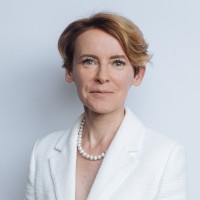
Marija Golubeva
Founder & CEO
Former Minister of the Interior of Latvia. Richard von Weizsäcker Fellow at Robert Bosch Academy, Berlin. Distinguished Fellow at Center for European Policy, Washington DC. Has led simulations and hybrid threat response trainings for clients in Germany, France, UK, and Latvia.

Dmitrijs Baranovs
Founder & CTO
IT architect with experience of building digital services for clients globally, from Sweden to South Africa.

Maciej Makulski
Meleys Representative in Poland
Political analyst with over a decade of professional experience in policy analysis and international project management. His expertise includes regional security, hybrid threats, disinformation, and resilience, with a particular focus on Central and Eastern Europe and the Baltic Sea region. Certified Meleys simulation facilitator.
Meleys is proud to be trusted by



See an exercise in action
Book a 30-minute demo and we'll walk you through the platform.